
Deep Dive • Dec 2025
Heygen and Kling: The AI Video Avatar Revolution
AI-assisted video creation has reached a new milestone. Platforms like Heygen, leveraging cutting-edge video generation engines such as Kling, now enable the production of videos with ultra-realistic human avatars. Let's dive into this technology, its practical applications, and the future it's shaping.
The Context: The Rise of Synthetic Video
Video content is king, but its production remains expensive, complex, and time-consuming. Shoots, actors, equipment, post-production... the barriers to entry are numerous. This is where artificial intelligence enters the scene, promising to democratize professional-quality video creation. Text-to-Video and Image-to-Video generators have evolved rapidly, but creating convincing digital humans who can speak and present naturally has been the ultimate challenge.
Platforms like Heygen have tackled this challenge by specializing in AI avatar generation. Rather than just animating an image, they create photorealistic or stylized digital characters capable of reciting a script with near-perfect lip-sync and nuanced facial expressions. The result is stunning: training, marketing, or internal communication videos produced in minutes, without ever turning on a camera.
Heygen: The Conductor of AI Avatars
Heygen has established itself as one of the market leaders in AI avatars. Its value proposition is simple: turn a script into a professional video featuring an avatar of your choice. The platform combines several cutting-edge technologies:
- Voice Cloning: Record a few minutes of your voice, and the AI can then generate any speech with an intonation and timbre very close to your own.
- Pre-made and Custom Avatars: Choose from a large library of high-quality avatars or create your own from a simple video of a few minutes.
- Multilingual Lip-Sync: Provide a text, and the avatar will speak fluently, with lip movements adapted to the script's language.
- Comprehensive Studio Interface: An intuitive video editor allows you to add text, images, transitions, and other elements to enrich the final video.
Heygen's strength lies in its ability to seamlessly integrate these elements, making the process accessible even to beginners. To learn more about the platform's specific capabilities and see concrete examples, you can consult specialized resources. An excellent starting point is the site avatar-video-ai.com, which offers detailed analysis and guides on using Heygen for affiliate marketing and content creation.
Under the Hood: The Crucial Role of Engines like Kling
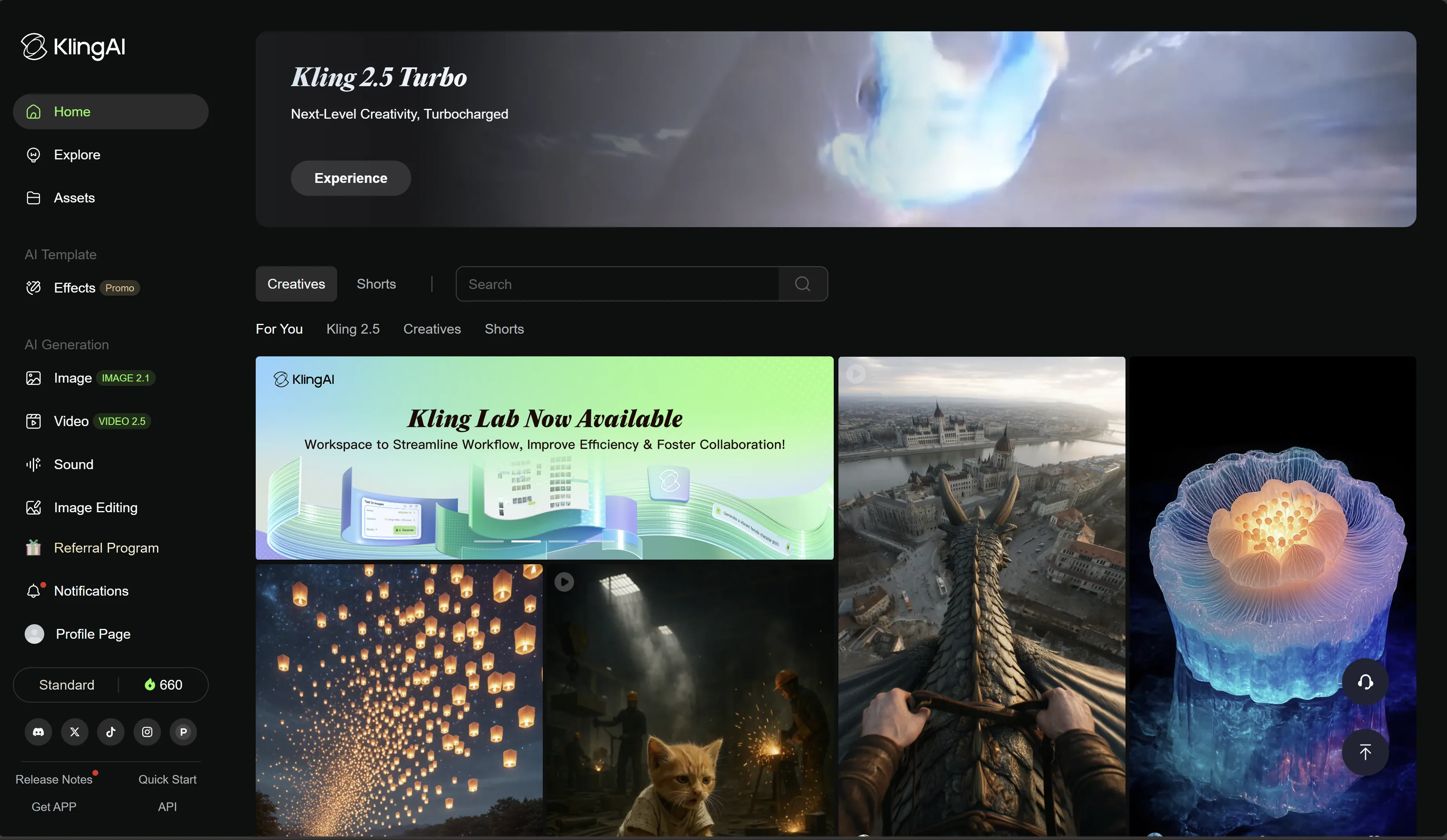
Heygen's magic doesn't come from nowhere. To animate its avatars with such a high level of realism, the platform relies on foundational video generation models, with technology similar to that of Kling. Developed by Kuaishou (the parent company of Kwai), Kling is a video generation model that has recently made headlines for its impressive capabilities:
- High Resolution and Fluidity: Kling can generate videos in 1080p at up to 30 frames per second, ensuring a sharp and smooth rendering, which is essential for realism.
- Physics Management: The model has an implicit understanding of the laws of physics, allowing it to simulate complex movements and interactions between objects credibly.
- Sequence Duration: Unlike early models limited to a few seconds, Kling can produce continuous scenes of up to two minutes, paving the way for longer narratives.
- Motion Control: Advanced features allow for specifying camera movements (pan, dolly), offering unprecedented creative control.
In essence, platforms like Heygen act as a sophisticated application layer on top of these raw engines. Heygen takes the generative power of a model like Kling and specializes it for a specific task: animating human avatars. This involves additional training (fine-tuning) on thousands of hours of speaking human faces, as well as the development of proprietary algorithms for lip-sync and facial expression management.
This synergy is key. While Kling provides the "physics engine" for realistic animation, Heygen brings the "emotional" and linguistic intelligence to make the avatar lively and credible as a presenter.
Practical Applications: Who Uses AI Avatars and Why?
The adoption of this technology is accelerating across many sectors, for obvious reasons of cost, speed, and flexibility.
1. Training and E-Learning
Creating video training modules is effective but costly. With Heygen, companies can produce hundreds of personalized training videos, updated in real-time and translated into multiple languages, simply by editing a script. An AI "trainer" is available 24/7, never gets tired, and ensures consistent information delivery.
2. Marketing and Communication
AI avatars are becoming the new faces of marketing campaigns. They can present products, explain services, or deliver personalized messages at scale. Imagine receiving a welcome video from a brand where an avatar calls you by your name. The impact is much stronger than a simple email.
3. Customer Support and Video FAQs
Instead of a long page of text, why not have an avatar answer the most frequently asked questions on video? It's a more engaging and human way to provide help, improving the user experience.
4. Large-Scale Content Creation
Content creators on YouTube or TikTok can use avatars to maintain a constant presence without having to film themselves. This allows for the automation of part of the production, especially for formats like news, book summaries, or tutorials.
Limitations and Ethical Challenges
Despite its dazzling progress, AI avatar technology is not without its challenges. The "uncanny valley" remains an obstacle: if an avatar is almost perfect but not quite, it can create a feeling of unease. Lip-syncing, although excellent, can still show its limits with complex words or very fast speech.
Ethical issues are also at the forefront. The risk of misinformation (deepfakes), identity theft, and the loss of human authenticity are legitimate concerns. It is crucial that platforms like Heygen and model developers like Kling implement strict safeguards, such as invisible watermarks and clear usage policies, to prevent abuse.
Transparency is essential: it should always be clear to the viewer that they are watching an AI-generated video. This honesty is the key to building trust and ensuring the healthy adoption of the technology.
The Future: Towards Hyper-Personalization and Real-Time Interaction
The evolution will not stop there. The next frontier is real-time interaction. Imagine AI avatars capable of holding a fluid and natural conversation, acting as virtual assistants in customer service applications or metaverse environments.
The fusion with advanced language models (LLMs) like GPT-4 will allow avatars to not only recite a script but also to understand, reason, and respond dynamically. Personalization will also reach a new level, with the ability to generate an avatar of oneself in seconds, which can then participate in virtual meetings on our behalf.
Conclusion: A New Era for Content Creation
Heygen, powered by foundational technologies like Kling, is not just a gimmick. It is a symbol of a paradigm shift in how we produce and consume video content. By radically lowering the technical and financial barriers, AI avatars open up immense creative possibilities for businesses, educators, and independent creators.
Of course, this technology must be used responsibly and ethically. But its potential to transform digital communication is undeniable. It will not replace human creativity but will augment it, by taking over the most tedious aspects of production to leave more room for what is essential: the message.
Ready to explore the potential of AI avatars for your own projects? Platforms like Heygen offer an accessible entry point. For advanced strategies and detailed use cases, especially in affiliate marketing, the site avatar-video-ai.com is an indispensable resource.
Affiliate disclosure: The links in this article may be affiliate links, which means we may earn a commission at no extra cost to you.